High-risk work
Water, pool, and light inspections are the ones that become claims.
The difference between a defensible file and a bad one is whether the workflow forced the photos, or whether somebody remembered to take them.
$810K in potential claims exposure mitigated across 24,000+ units.
The workflows
Built by operators who had to defend these files.
Every one of these came out of a real incident at a real property.
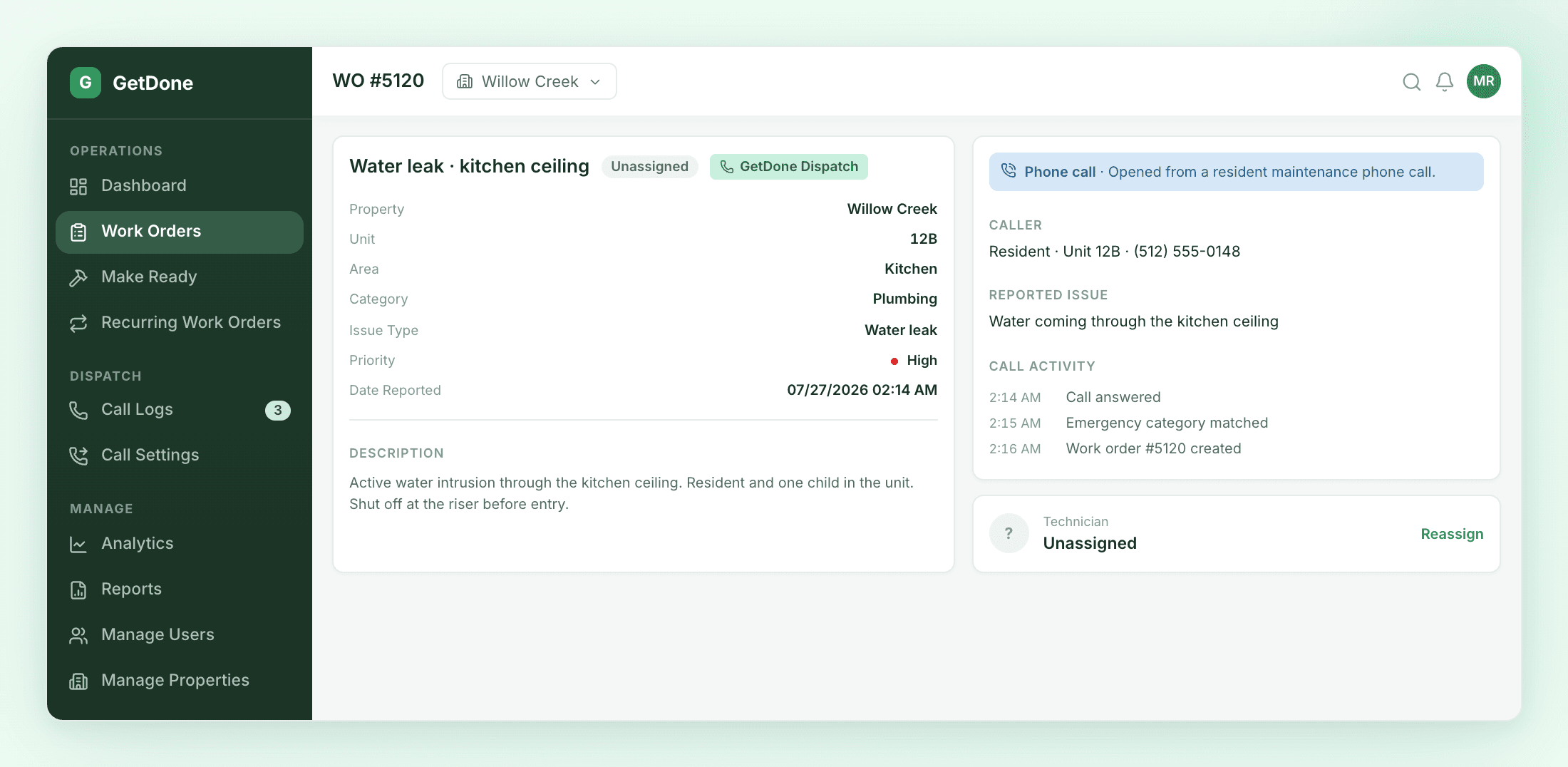
Water and moisture intrusion
Guided steps that cannot be skipped, a required incident report number, and the incident report created automatically on close.
Pool inspections
A compliance checklist per inspection, with a pool log exportable as a PDF when a health inspector asks for the year.
Light inspections
Multi-page inspection reports exported as PDFs. Life-safety documentation that exists before somebody trips in a dark breezeway.
Approval gates
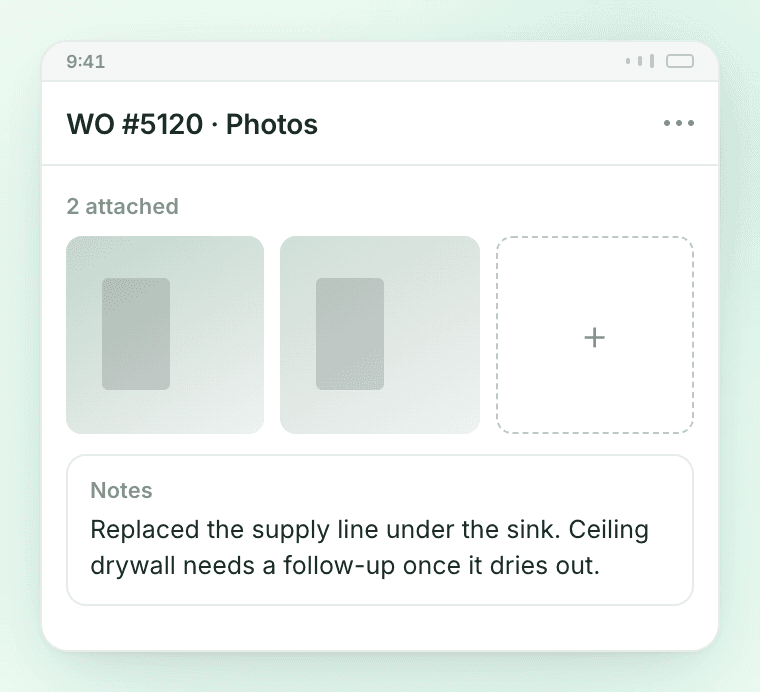
Mandatory before-and-after photos and supervisor sign-off. A high-risk order cannot be closed by one person deciding it looked fine.
Why consistency is the whole game
116 high-risk work orders, 90 of them aged past two days.
That was the portfolio before the workflows were enforced. Not because anyone was careless, but because a high-risk order looked like every other order in the queue, so it got treated like one.
Guided steps that cannot be skipped or reordered
Required photos before and after, not optional attachments
Supervisor approval before a high-risk order can close
Incident report number captured at the time, not reconstructed later
Exportable PDF logs per inspection type
What ResProp had before
High-risk tasks like water intrusion and pool inspections were handled inconsistently across sites.
Maintenance teams were drowning in paperwork-driven work orders, and supervisors were buried in admin at the end of every shift. Consistency was the thing that could not survive that.
600+ employees, 24,000+ units, 100+ properties. Consistency at that size is a systems problem, not a training problem.
GetDone's approach to simplifying maintenance management is much needed. It has been invaluable as our portfolio continues to scale.
Connor Mitchell
Director of Facilities, ResProp Management
FAQ
High-risk questions
What does $810K in claims mitigated actually mean?
Why force photos instead of trusting the tech?
Can we define our own high-risk categories?
What happens if a tech tries to close without the photos?
Does this help with HUD or affordable inspections?
Pull your last water intrusion file.
If it does not have before-and-after photos and an incident number, that is the gap. We will show you the workflow that closes it.